
Backyard Belongings: Experiences of the everyday in the Canberra region, Australia
Steve Brown
30 July 2024

‘Backyard Archaeology Symposium’: Panel session with (from left) Steve Brown, Anne Claoue-Long, Nicola Hayes, Martin Rowney, Doug Williams.
Photo credit: Anna Wong
In the blog post of 24 April 2024 on the Backyard Archaeology exhibition at the Canberra Museum and Art Gallery (CMAG), a call was made for greater attention to be paid in heritage work to the routine and temporal aspects of everyday life. Complementing this call and the exhibition, a Symposium on Backyard Archaeology (a National Archaeology Week event) was held on 25 May 2024 to explore the ways in which archaeological and horticultural work undertaken in the ACT region engages with the everyday lives and experiences of past- and present-day Canberrans.
The Symposium, aimed at a general audience and attended by over 50 people, intended to raise awareness of archaeology, history, and horticulture in local contexts and of personal importance (as opposed to the grand and the best). The four presenters showed how backyard studies can reveal and inspire stories of everyday life through found and excavated objects and nurtured gardens; and how backyards can enable stories of a local area and beyond to be revealed. These experiences and meaning-making practices (‘belongings’) are relevant to people interested in family history research and creating place history narratives.
An outline of each of the four presentations is provided below, as well as some remarks on the panel session whose focus was ‘backyard archaeology – everyone can do it!’

Backyard bricks. Canberra red bricks recycled to create a wall and pavement.
Photo credit: Martin Rowney.
‘Canberra Reds’, as shown in the image above, can be found in backyards across the Australian Capital Territory (ACT) and surrounds. Such red bricks were produced in huge numbers (total production was estimated at 600 million) and were vital to the construction of residences, public buildings, and government offices in the early decades of the national capital. The presentation by Martin Rowney (GML Heritage) told the story of the Canberra Brickworks at Yarralumla, which operated from 1913 to 1976 – a tale of experimentation (as evidenced by different kiln types) and mass production. Whether used to construct houses or recycled for garden edging and pathways, Canberra reds are a reminder of local industry, construction work, and the everyday re-purposing of the building blocks of early Canberra.
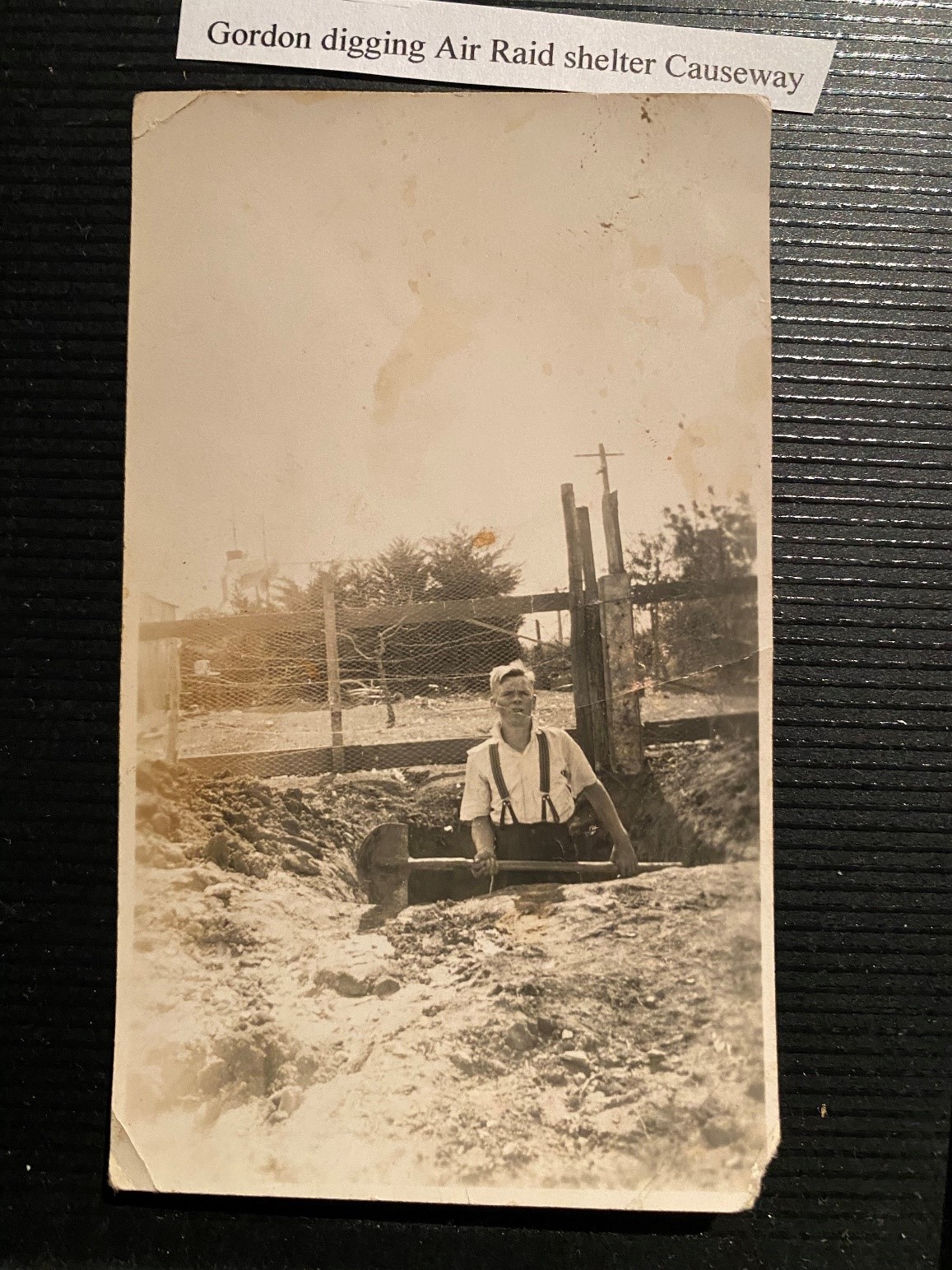

Photo source: Nicola Hayes.
Nicola Hayes (Navin Officer Heritage Consultants) is an archaeologist who has a family ancestry in Canberra dating back to 1924. Working with her mother, Susan Dal Santo, Nicola has mapped the many places – and numerous different backyards – at which her family members have lived in the ACT over 100 years. For example, from the late 1920s, Nicola’s grandfather, Gordon Keeley (1925-2000), lived in the workers encampment known as The Causeway. In the backyard of his timber-built home, he dug an air raid shelter. The shelter – yet to be discovered – is one of many traces that can reveal stories of a century of everyday family life in the ACT region.
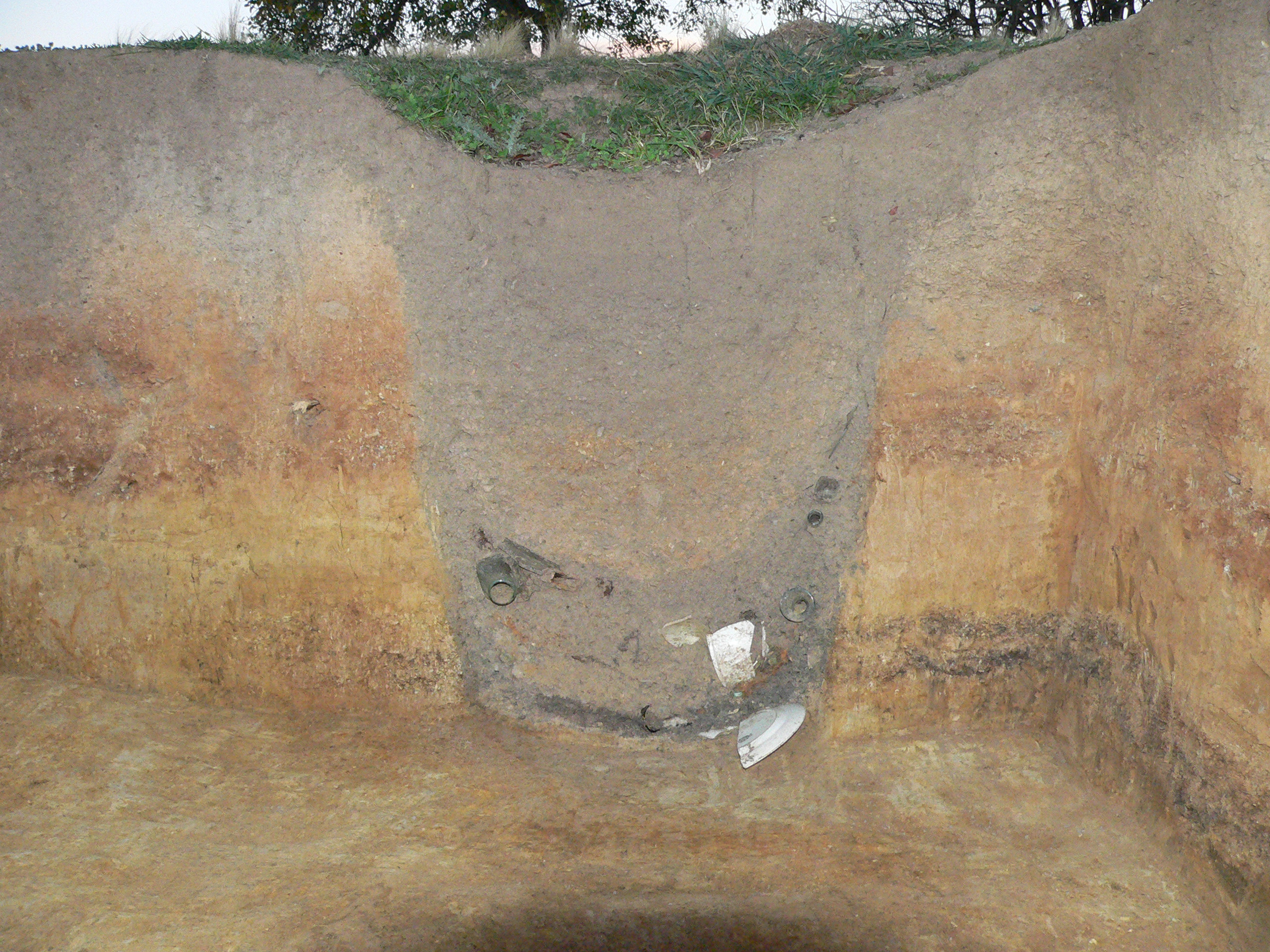
Backyard dunny. Side view of a partially excavated cesspit, the bottom of which is filled with the discarded vestiges of everyday life.
Photo credit: Doug Williams.
Doug Williams (Access Archaeology) believes that, for an archaeologist, “a cesspit is gold”. In his presentation, Doug described an excavation of a 19th century latrine on an early settler property located between Queanbeyan and Bungendore. In this backyard dunny, broken and unwanted objects had been disposed of. The thousands of objects recovered included metal, glass, ceramics, bone, ammunition, organic remains and a variety of personal items such a children’s toys. The excavated contents of the cesspit were both evocative and informative of everyday family life on a small-scale, 19th century remote property.
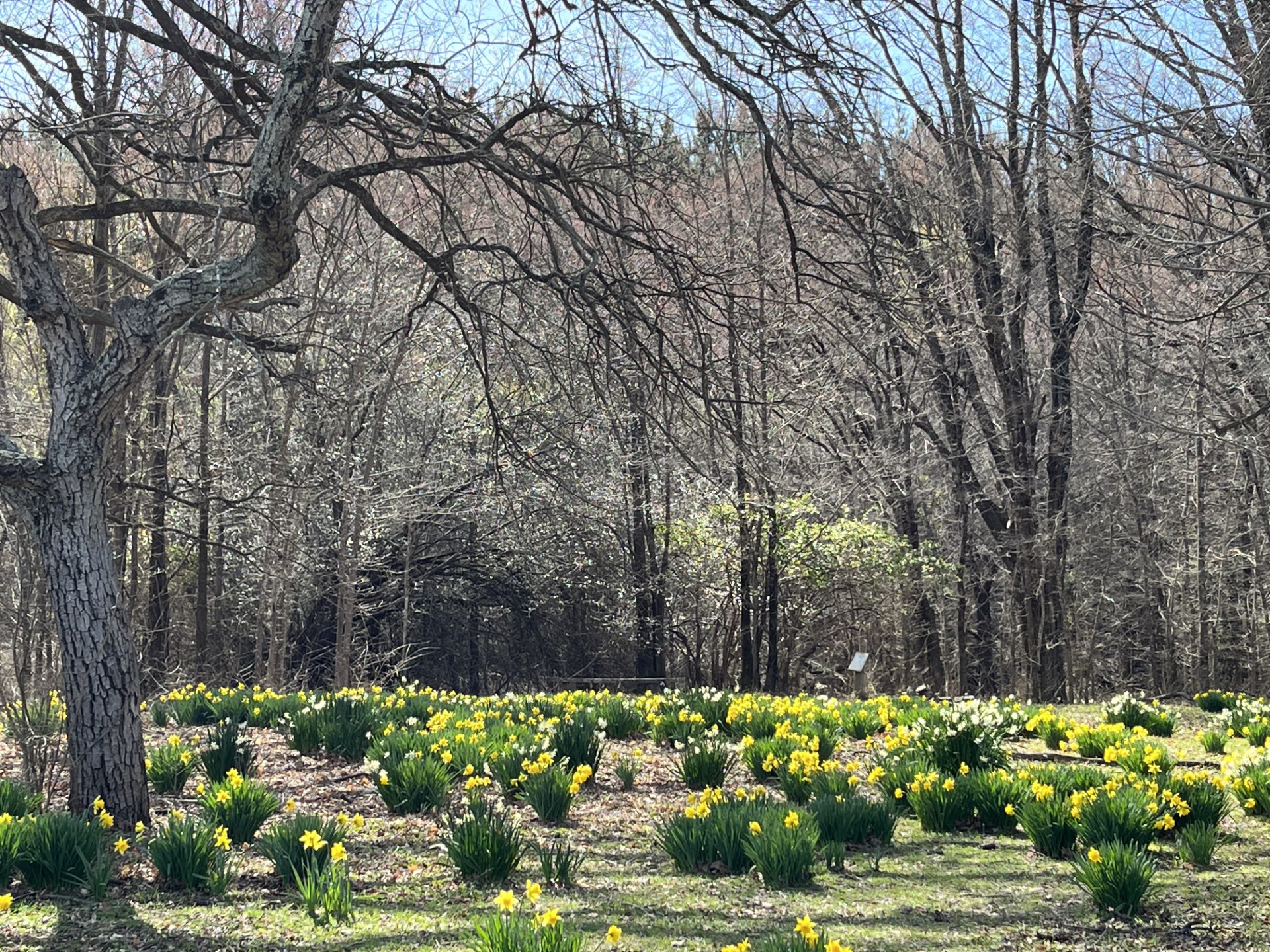
Backyard plants.
Photo credit: Anne Claoue-Long.
Digging is not the sole prerogative of archaeologists. Objects, whether amazing or ordinary, can be recovered while gardening. Additionally, plants can hold meanings and memories – of other gardeners and family members, past land uses, gardening fashions and styles, and plants that have flourished or floundered. Anne Claoue-Long (Australia Garden History Society) shared stories of her backyard plants and the ways that memories are nurtured through gardening and plants are reminders of relationships, as well as emotional connections comprising, for example, love and loss.
The Symposium concluded with a panel discussion on ‘backyard archaeology – everyone can do it!’ The discussion recognised that when we experience our homes and local areas with a sense of curiosity and desire to know more, ‘we are all archaeologists’. That is, whether gardening, renovating, or digging, anybody can encounter lost or discarded and forgotten things. No matter how special or mundane, everyday found things or objects can connect us to other individuals and families, as well as places and past events and activities. Furthermore, found objects and garden plants can inspire stories of local places and connect those items to national and global events. Objects can be especially important in making visible the experiences of marginalised and disadvantaged groups.
What have you uncovered in your backyard?
The Symposium was a 2024 National Archaeology Week event and was supported by the Canberra Museum and Art Gallery, University of Canberra, Australian Research Council ‘Everyday Heritage Project’, and the Australian Archaeological Association.
